

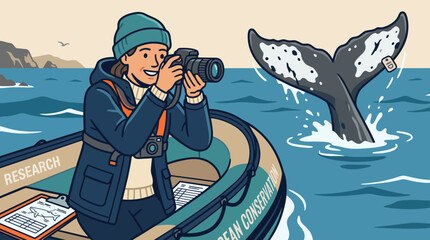
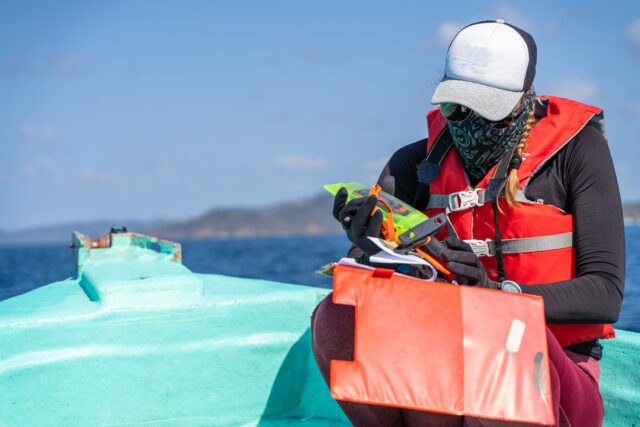

Every marine mammal sighting has a story behind it.
The public often sees the final result.
A map.
A scientific paper.
A population estimate.
A conservation recommendation.
What we don’t always see are the countless hours that made that information possible.
The early mornings.
The long days on the water.
The difficult weather.
The equipment that doesn’t cooperate.
The careful note-taking.
And, perhaps most importantly, the patience required when wildlife refuses to follow anyone’s research schedule.
Before There Is Data
Before an observation becomes a row in a database, somebody has to make it.
That may mean scanning an enormous stretch of ocean from a vessel.
Listening for animals through acoustic equipment.
Walking miles of coastline.
Reviewing thousands of photographs.
Flying aerial surveys.
Or returning repeatedly to the same location hoping to encounter an animal that may—or may not—appear.
Field science requires an extraordinary combination of discipline and curiosity.
Researchers follow protocols because consistency matters.
But they also remain curious because nature has a habit of presenting things we didn’t expect.
The Human Side of Scientific Data
Once observations enter a dataset, it is easy to forget how they got there.
Latitude.
Longitude.
Species.
Behavior.
Environmental conditions.
Time.
Date.
Photographs.
Measurements.
The information becomes structured and wonderfully useful.
But behind those fields was a person observing an animal in the real world.
That human element is worth remembering.
The quality of environmental information ultimately depends on the care taken by the people collecting it.
Technology Should Respect That Work
When people have spent hours, days, or years collecting observations, the systems used to manage that information should make their work easier—not create another obstacle.
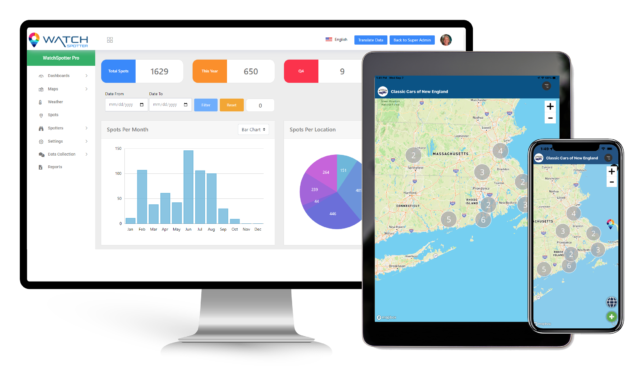
That’s something we think about often at WatchSpotter.
Researchers shouldn’t have to spend unnecessary hours reconstructing observations from separate notebooks, GPS files, photographs, spreadsheets, and databases.
Technology should quietly support the scientific process.
Capture what matters.
Preserve context.
Maintain consistency.
Make information accessible.
Then get out of the way.
Because the technology isn’t doing the science.
People are.
Celebrating the People Behind the Data
As we look toward SMM2026, much of the attention will understandably be on research findings.
New discoveries.
New methodologies.
New technologies.
New conservation challenges.
But conferences also provide an opportunity to recognize the community responsible for creating that knowledge.
Researchers.
Students beginning their careers.
Experienced scientists sharing decades of knowledge.
Field technicians.
Observers.
Volunteers.
Response teams.
Conservation organizations.
Government agencies.
Communities.
Different roles, but a shared curiosity about the ocean and the animals that depend on it.
Every scientific finding begins somewhere.
Often, it begins with someone simply paying attention.
So the next time you see a dot on a map representing a marine mammal sighting, remember:
There’s a story behind that spot.
And there’s probably a person behind the story.