



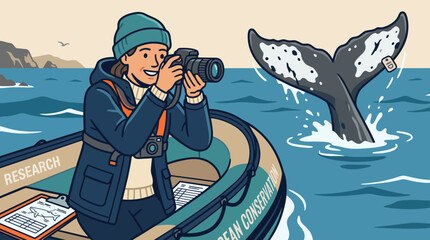
Before we can protect something, we have to understand it.
Where does a species go?
What does it eat?
Where does it reproduce?
Which habitats does it depend on?
How is its population changing?
What pressures does it face?
These sound like simple questions.
They are anything but.
Understanding Takes Time
Answering questions about wildlife can require years of surveys, observations, photographs, acoustic recordings, samples, satellite data, environmental measurements, and countless hours spent in the field.
And even after decades of research, there is always more to learn.
That’s not a weakness of science.
It’s one of its strengths.
Science continually asks questions, tests assumptions, gathers evidence, and improves our understanding as new information becomes available.
Conservation depends on that process.
Evidence Before Action
Good conservation decisions aren’t built on assumptions.
They require evidence.
Where are critical habitats?
Which populations may be vulnerable?
Are threats increasing?
Are conservation measures working?
Where should limited resources be focused?
The better our understanding, the better equipped decision-makers are to answer those questions.
And evidence begins with observation.
Supporting the People Doing the Science
At WatchSpotter, we’re fortunate to work around people and organizations committed to gathering that evidence.
Our role is a small one.
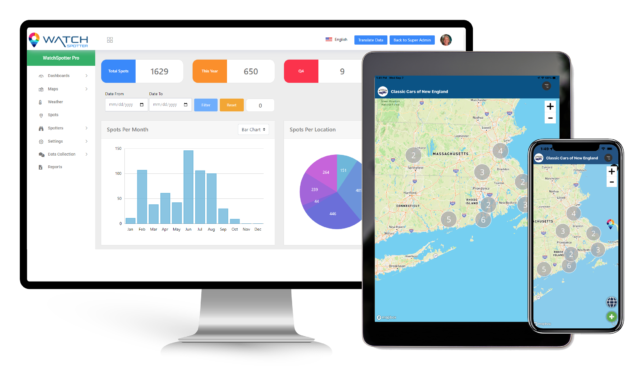
Help make observations easier to capture.
Help preserve their context.
Help organize them consistently.
Help make them accessible for analysis and reporting.
The science belongs to the scientists.
The discoveries belong to the people doing the work.
Technology simply helps connect the pieces.
We think that’s exactly where technology belongs.
People Protect What They Understand
There is another dimension to scientific understanding.
Knowledge doesn’t only inform policy and management.
It can also change how people see the natural world.
When we understand where an animal travels, how it raises its young, which habitats it depends upon, or what challenges it faces, an abstract species becomes something much more tangible.
Understanding creates connection.
And connection can inspire stewardship.
One Ocean. One Future.
As researchers gather for SMM2026, the conference theme—One Ocean, One Future—captures something fundamental about conservation.
Species don’t exist independently from their ecosystems.
Ecosystems don’t exist independently from one another.
And conservation doesn’t happen independently from science.
Our ability to protect the ocean’s future depends in large part on our willingness to keep observing, questioning, learning, and sharing what we discover.
Because before meaningful action comes understanding.
And before understanding comes observation.