



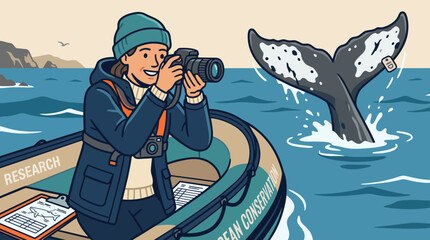
Science is often remembered for its big discoveries.
But big discoveries are usually built from thousands of very small moments.
A mother and calf observed in an unexpected location.
A change in behavior.
A species returning to an area where it hasn’t been documented recently.
A photograph that identifies an animal first recorded years earlier.
A subtle change in habitat.
None of these observations necessarily announces itself as important when it happens.
That’s what makes field science so remarkable.
We Don’t Always Know What Matters Yet
Researchers collect observations based on scientific questions and established methodologies.
But nature doesn’t limit itself to the questions we’re currently asking.
Sometimes an observation becomes important only later.
Perhaps another researcher makes a similar observation somewhere else.
Perhaps an individual animal is encountered again.
Perhaps a pattern begins emerging across multiple field seasons.
Or perhaps new technology allows scientists to revisit historical information in ways that weren’t possible when it was originally collected.
The significance of an observation can change as our knowledge grows.
Science Is Cumulative
Very little scientific understanding exists in isolation.
Researchers build on previous research.
Datasets build across field seasons.
Observations from one region may complement research conducted somewhere else.
Photographs collected for one purpose may eventually help answer another question.
Knowledge accumulates.
That’s why the preservation and accessibility of scientific observations matter so much.
We aren’t simply collecting information for today.
We’re contributing to a body of knowledge that future researchers may use in ways we cannot predict.
The Larger Story
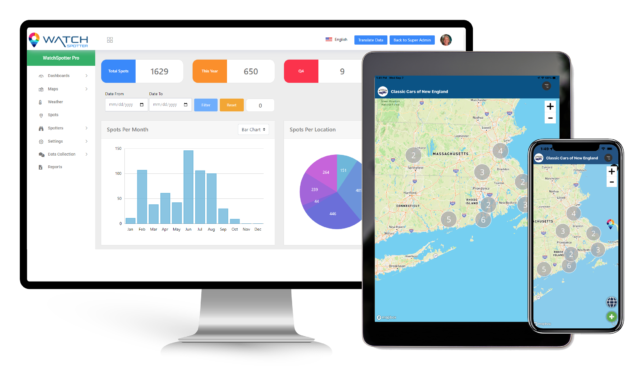
At WatchSpotter, this idea has become central to how we think about environmental observations.
Every observation contributes to a larger story.
A story about an individual animal.
A population.
A habitat.
An ecosystem.
Or perhaps an ocean undergoing change.
Technology can help connect those observations.
But the story belongs to the researchers and communities working to understand the natural world.
One Ocean, Many Pieces
SMM2026 will bring together people studying marine mammals across species, disciplines, and geographic regions.
Each arrives with a different piece of the puzzle.
One researcher may spend a career studying a particular population.
Another may focus on acoustics.
Another on health.
Another on habitat.
Another on human interactions.
Individually, those perspectives are valuable.
Together, they help us see more.
Perhaps that’s one of the most beautiful things about science.
You don’t always know which observation will matter most.
So you treat every observation as though it might.