
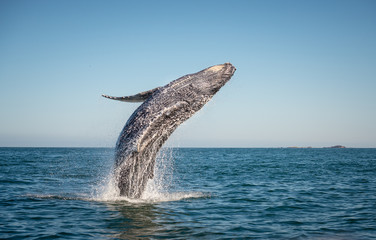
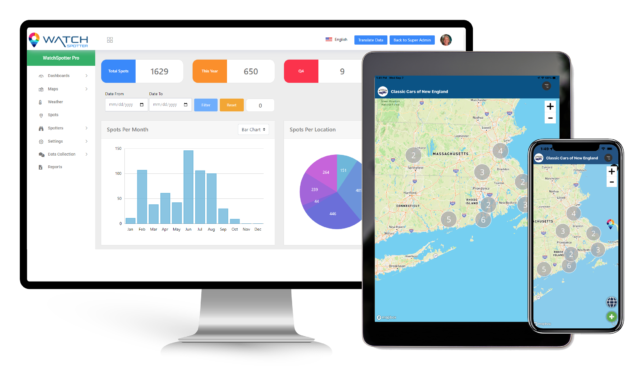
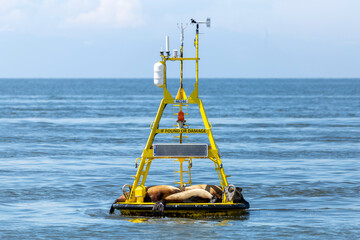
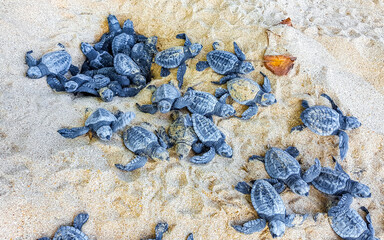





How do you give a whale a health check without asking it to stop?
It’s a remarkable challenge.
And researchers are developing increasingly sophisticated ways to answer it.
Recent work highlighted by NOAA Fisheries demonstrates how researchers are using drones and other technologies to study critically endangered North Atlantic right whales.
From above, researchers can collect measurements and assess aspects of an animal’s body condition while reducing the need for close physical interaction.
A whale continues moving through the ocean.
A researcher observes from a distance.
And that observation becomes another piece of information scientists can use to better understand one of the world’s most endangered large whale species.
A New View of an Old Scientific Practice
Observation has always been fundamental to marine mammal science.
What continues to evolve is how we’re able to observe.
Drones can provide perspectives that were once extremely difficult to obtain.
Passive acoustic monitoring can help researchers detect animals they may never see.
Satellite tags can provide information about movement over enormous distances.
Photo identification can help recognize individual animals across years.
Remote sensing can add environmental context to what researchers observe in the field.
Each technology provides another potential piece of the story.
Learning Without Unnecessary Disturbance
There is something especially compelling about technologies that allow researchers to gather meaningful information while minimizing their impact on the animals being studied.
Wildlife research has always involved balancing the need to understand animals with the responsibility to respect them.
Technology can sometimes help widen that distance.
A drone doesn’t eliminate every research challenge.
An acoustic recorder doesn’t answer every question.
A satellite tag isn’t appropriate for every study.
But each tool expands the scientific toolbox.
The important question isn’t whether a technology is impressive.
It’s whether it helps answer a meaningful scientific question responsibly.
Technology Isn’t the Story
It’s easy to become fascinated by the equipment.
We certainly do.
But technology itself isn’t the reason this work matters.
What researchers are able to learn because of it is.
Can we better understand an animal’s health?
Can we identify important habitat?
Can we detect changes in distribution?
Can we understand behavior without unnecessarily interfering with it?
Can we recognize a conservation concern earlier?
Those outcomes matter far more than the technology that enabled them.
Connecting New Observations With Existing Knowledge
As observation technologies become more sophisticated, another challenge becomes increasingly important.
How do we connect all of this information?
A drone image may tell us one thing.
An acoustic detection another.
A vessel survey another.
A historical sighting record another.
Environmental measurements provide additional context.
The future of marine science isn’t simply about having better tools for collecting observations.
It is also about finding better ways to connect those observations so researchers can understand the larger picture.
A Better Way to Observe
As we prepare for SMM2026, this is one of the areas of marine mammal science we’re most excited to learn more about.
Not technology for technology’s sake.
Technology serving curiosity.
Technology supporting science.
Technology helping researchers observe responsibly and understand more.
Sometimes advancing science means getting closer.
But sometimes the breakthrough comes from something very different.
Finding a better way to observe.