
All California Sea Lions Harmful Algal Blooms Invasive Species Marine Mammals Marine Scientists Sea Turtle Nesting Sharks Use Cases
One Ocean. One Future. What It Means to WatchSpotter
Marine Mammals

One Ocean. One Future. What It Means to WatchSpotter

Four words can say a lot. One Ocean. One Future. As we prepare for the Society for Marine Mammalogy’s 2026…

Every Observation Matters: The Philosophy Behind WatchSpotter
Marine Mammals

Every Observation Matters: The Philosophy Behind WatchSpotter

Every observation begins as a moment. An animal surfaces. A bird calls. Tracks appear on a beach. A water-quality measurement…

One Ocean. One Future: Why Marine Conservation Depends on Collaboration
Marine Mammals

One Ocean. One Future: Why Marine Conservation Depends on Collaboration

One Ocean. One Future: Why Marine Conservation Depends on Collaboration The ocean doesn’t recognize borders. A whale migrating through the…

A Better Way to Observe: How Technology Is Changing Marine Mammal Science
Marine Scientists

A Better Way to Observe: How Technology Is Changing Marine Mammal Science

How do you give a whale a health check without asking it to stop? It’s a remarkable challenge. And researchers…

From Observation to Understanding: What Is Environmental Intelligence?
Marine Mammals

From Observation to Understanding: What Is Environmental Intelligence?

We talk a lot about environmental data. But data alone isn’t the destination. Imagine a researcher records a marine mammal…

Conservation Begins With Understanding
Marine Mammals

Conservation Begins With Understanding

Before we can protect something, we have to understand it. Where does a species go? What does it eat? Where…

Small Observations, Big Impact
Marine Mammals

Small Observations, Big Impact

Science is often remembered for its big discoveries. But big discoveries are usually built from thousands of very small moments.…

Why Long-Term Environmental Monitoring Matters
Marine Mammals

Why Long-Term Environmental Monitoring Matters

Some discoveries happen in an instant. Others take decades. A single field season can provide valuable insight into what is…

What Can Environmental Data Reveal?
Marine Mammals

What Can Environmental Data Reveal?

Marine mammals can’t tell us directly how their environment is changing. But sometimes their behavior can. Changes in distribution. Changes…

The Story Behind a Sighting: Celebrating the People Behind Marine Mammal Science
Marine Mammals

The Story Behind a Sighting: Celebrating the People Behind Marine Mammal Science

Every marine mammal sighting has a story behind it. The public often sees the final result. A map. A scientific…

Every Observation Matters: How Small Moments Build Big Science
Marine Mammals

Every Observation Matters: How Small Moments Build Big Science

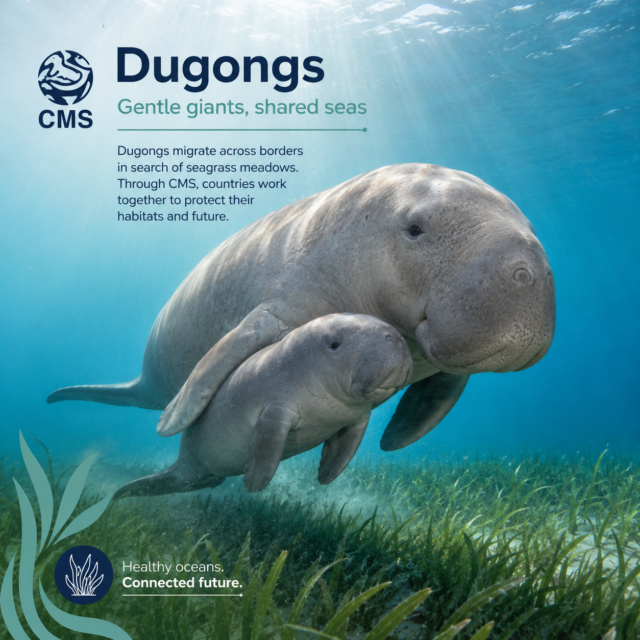
A single observation may not seem significant. One dolphin sighting. One whale breach. One dugong feeding in a seagrass meadow.…

Strengthening Data for the UN-CMS Global Assessment of Dugong Conservation Needs
Marine Mammals

Strengthening Data for the UN-CMS Global Assessment of Dugong Conservation Needs

Recently featured in SIRENEWS, the newsletter of the Sirenia Specialist Group Some opportunities feel less like business development and more…

From Observation to Understanding: What Is Environmental Intelligence?

We talk a lot about environmental data.

But data alone isn’t the destination.

Imagine a researcher records a marine mammal sighting.

Species.

Location.

Time.

Photograph.

Behavior.

Environmental conditions.

Perhaps information about other animals nearby.

That’s an observation.

Now combine that observation with hundreds—or thousands—of others.

Suddenly, we can begin asking different questions.

Seeing Beyond the Individual Observation

Where are animals being seen most frequently?

Are those locations changing?

Are particular behaviors associated with certain habitats?

Are patterns different across seasons?

Are populations moving differently than they did ten years ago?

Does what one research team is observing connect with findings somewhere else?

The individual observations are still data.

But collectively, they can begin creating understanding.

That’s what we mean by environmental intelligence.

More Data Isn’t Necessarily Better

It is remarkably easy to collect information today.

Sensors generate data.

Cameras generate data.

Satellites generate data.

Researchers generate data.

The challenge increasingly isn’t whether we can collect information.

It’s whether we can make that information useful.

Can observations be found?

Can they be understood?

Can they be compared?

Can photographs, locations, measurements, and field notes remain connected?

Can information collected today still make sense years from now?

Those questions matter because a mountain of disconnected data isn’t necessarily knowledge.

Shortening the Distance Between Observation and Understanding

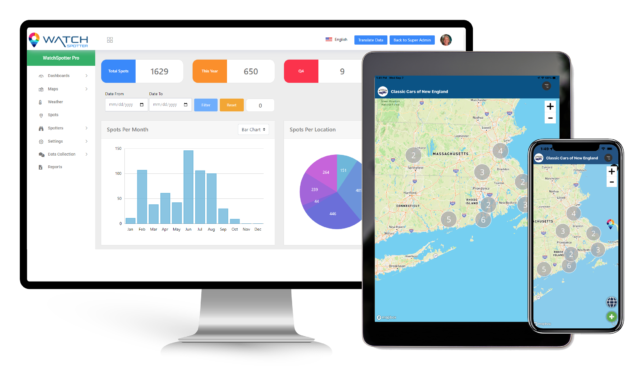
This idea sits at the heart of why we built WatchSpotter.

We didn’t simply want to replace paper forms with digital forms.

We wanted to help remove friction between what happens in the field and what researchers ultimately need from those observations.

That might mean keeping photographs connected to sightings.

Maintaining standardized information across field teams.

Visualizing observations geographically.

Working offline in remote environments.

Or making information easier to prepare for analysis and reporting.

None of those things replaces scientific expertise.

They support it.

Technology Isn’t the Intelligence

This distinction is important.

Software doesn’t look at an ecosystem and decide what matters.

Researchers do.

Technology doesn’t create scientific understanding.

Scientists do.

Technology can organize information, connect observations, visualize patterns, and make information more accessible.

But the understanding we gain from the observations is the intelligence.

That’s why environmental intelligence isn’t really a technology story.

It’s a science story.

From Information to Action

Ultimately, the reason any of this matters is what better understanding can enable.

Better research questions.

Better collaboration.

More informed management.

Faster response.

More effective conservation.

We don’t need more environmental information simply for the sake of having it.

We need information capable of helping us understand what’s happening in the natural world.

As we look toward a future of increasingly sophisticated environmental technology, perhaps that’s the question worth keeping at the center:

Not how much data can we collect?

But:

What can we understand because of it?

Copyright © 2025 WatchSpotter LLC. All Rights Reserved